
A great idea needs a great story. And that story often comes to life in your pitch deck. If you’re looking for funding, your pitch deck design is crucial. It’s not just about what you say, but how you present it. These pitch deck design tips will help you create a presentation that truly stands out to investors.
Disclosure: This article contains affiliate links. If you click a link and make a purchase, The Slide House may earn a small commission at no extra cost to you. We only recommend tools we genuinely believe will help you create better presentations. Read our full Affiliate Disclosure.
- Keep your slides clean and focused with one idea per slide.
- Use strong visuals and data storytelling to engage investors.
- Maintain brand consistency for a professional and memorable impression.
- Practice your delivery to match your amazing design.
- Understand your audience and tailor your message to their interests.
Keep It Simple, Stupid: The Power of Less
This is probably the most important rule in presentation design. Investors are busy people. They see hundreds of pitch decks. If your slides are cluttered, they’ll tune out. Fast.
Focus on one main idea per slide. Seriously. This forces you to be concise. It also makes your message clearer. Use headlines that tell the story. The body text should support that story, not overwhelm it.
Think of each slide as a billboard. You want people to grasp the message quickly. Too much text makes this impossible. In my experience, less is always more when it comes to investor decks.
Visuals Are Your Best Friend: Show, Don’t Just Tell
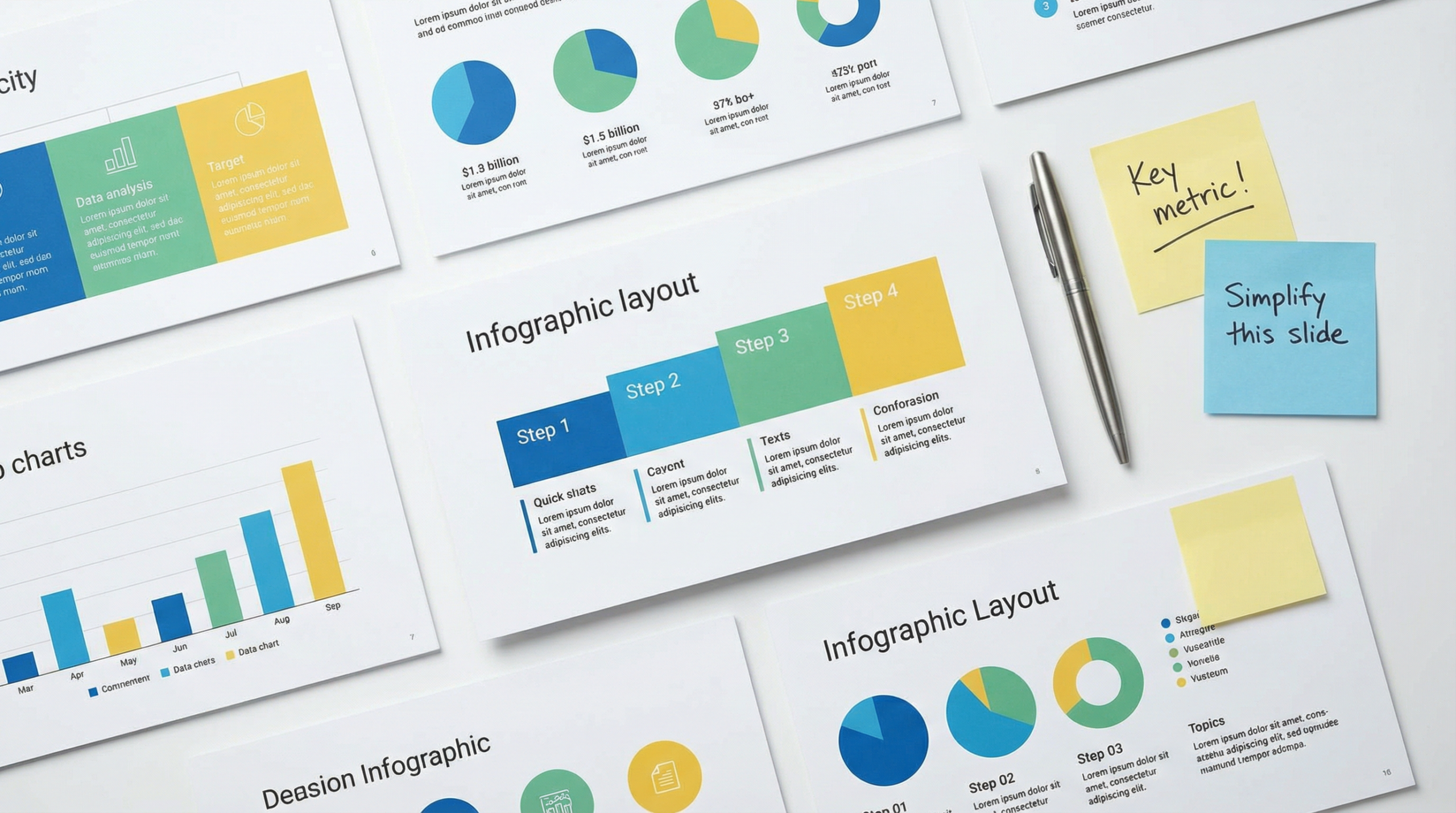
Humans are visual creatures. We process images much faster than text. This is why great visuals are non-negotiable in a pitch deck. Don’t just describe your product; show it.
Use high-quality images, product mockups, and explainer graphics. If you have a physical product, include great photos. For software, show screenshots of your user interface. Make it easy for investors to see what you’ve built.
Data visualization is also key. Instead of bullet points of numbers, use charts and graphs. Make sure they are easy to read and understand. A SaaS startup we worked with had amazing growth numbers but was just listing them. We turned their data into compelling line graphs. This instantly made their traction feel more real and impressive. It really helped them secure their seed round.
Brand Consistency Builds Trust
Your pitch deck is an extension of your brand. It needs to look and feel like your company. This means consistent use of your logo, brand colors, and fonts.
A consistent design makes your deck look professional. It shows you pay attention to detail. It also makes your brand more memorable. When an investor sees your deck later, they should instantly recognize it.
Don’t mix and match too many styles. Stick to a simple, clean aesthetic. If you don’t have strong brand guidelines yet, create a mini-guide for your pitch deck. This will ensure every slide looks like it belongs together. This is one of the crucial presentation design tips that make slides stand out, not just for pitches, but for any presentation.
Storytelling Through Structure
A pitch deck isn’t just a collection of slides. It’s a narrative. It should tell a compelling story about your business. This is where structure comes in. There’s a reason most successful pitch decks follow a similar flow.
Start with the problem you’re solving. Then introduce your solution. Talk about your market, your team, your business model, and your traction. End with your ask. This structure guides the investor through your vision.
Think about the emotional journey. You want to take them from understanding a pain point to getting excited about your solution. For more on this, check out our guide on How to Make a Pitch Deck That Gets Funded. Remember, a good story is memorable. A great story gets funded.

Mastering Your Delivery and the Deck as a Tool
Your pitch deck is a tool, not the entire presentation. Your delivery is just as important as your slides. Practice your pitch until it’s smooth and confident. Know your material inside and out.
Don’t just read your slides. Your slides should prompt you, not define every word you say. Investors want to hear from you, not just your deck. According to a Harvard Business Review article, effective presentations hinge on connecting with the audience, not just displaying data.
Consider using a tool like Pitch for creating and sharing your presentations. It offers collaborative features that can streamline your design process and help you deliver a polished, professional deck. This can be especially helpful when you have multiple team members contributing to the pitch. And remember, leave time for questions. An engaged investor is a good sign.
Need a Professionally Designed Deck?
We build investor-ready, boardroom-quality presentations for founders, executives, and sales teams.
Get Your Custom Deck →For additional research, see Nielsen Norman Group for research-backed communication and UX.
Need a presentation designed for you? TheSlidehouse creates professional slide decks for consultants, business owners, and entrepreneurs. Get started here →
If you want to draft presentations faster without starting from a blank slide, Gamma is a practical option for turning ideas into polished decks and visual documents more quickly.
🎁 Free Download: 5 Slides That Win Clients
Enter your email to get instant access to your free Presentation Design Cheat Sheet + the 5 slides every winning client deck must have.
Frequently Asked Questions
What should pitch deck design tips that win investors include?
Pitch Deck Design Tips That Win Investors should include a clear narrative, concise visuals, and a direct explanation of what the audience should do next.
How long should pitch deck design tips that win investors be?
Most business presentations work best when each slide has one core point and the overall deck stays focused on the decision being made.
How can I make the slides more persuasive?
Use evidence, strong structure, and examples that match the audience’s priorities, then reinforce the recommendation with a clear next step.
Should I include supporting data?
Yes. Use only the evidence that helps the audience make the decision, and present it in a visual format that is easy to understand quickly.