
Presentation Structures for Different Business Goals
You’ve got a killer message. But the way you arrange your slides will either amplify it or bury it. The structure of your presentation should never be an afterthought—it’s the skeleton that holds everything together.
Disclosure: This article contains affiliate links. If you click a link and make a purchase, The Slide House may earn a small commission at no extra cost to you. We only recommend tools we genuinely believe will help you create better presentations. Read our full Affiliate Disclosure.
Here’s what you’ll learn: five distinct presentation structures, each built for a specific business outcome. Whether you’re pitching for funding, presenting to the board, selling to a client, or driving internal change, there’s a framework that works better than generic “tell them what you’ll tell them” templates.
Key Takeaways
- Your presentation structure should match your specific business goal—not the other way around.
- The Funnel Structure closes deals. The Pyramid Structure wins boardroom approval. The Story Structure changes minds.
- A SaaS founder we worked with switched from a chronological deck to the Funnel Structure and closed their Series A in 11 days.
- The structure determines where you place your biggest idea—and that placement determines whether people remember it or forget it.
Why Structure Matters More Than You Think
Most presenters design their slides in the order things happen. Chronological. Logical. Safe. This is a mistake.
Psychologically, people remember what comes first (primacy effect) and what comes last (recency effect). The middle? It blurs. This is backed by decades of research in cognitive psychology. When you structure your presentation around your business goal instead of your timeline, you’re essentially engineering what people will remember and act on.
I’ve worked with consultants, founders, and C-suite executives for over 10 years. The ones who win use the same principle: they structure everything backwards from their desired outcome. If you want approval, you lead with the decision you need. If you want to drive a sale, you lead with the problem the client is losing sleep over. The information that follows serves that one core objective.

The structure isn’t decoration. It’s strategy.

The Five Core Presentation Structures
| Structure | Best For | Opening Slide | Biggest Strength |
|---|---|---|---|
| Funnel Structure | Sales pitches, client proposals | The problem (their pain) | Moves prospects from awareness to decision |
| Pyramid Structure | Board reports, executive summaries | The recommendation or key finding | Respects executive time; builds case efficiently |
| Story Structure | Change management, fundraising, vision pitches | A relatable moment or conflict | Creates emotional connection and retention |
| Problem-Solution Structure | Internal strategy sessions, new product launches | The business opportunity or threat | Clear cause-and-effect logic |
| Data-Driven Structure | Quarterly reviews, financial reporting, analytics | Key metric or business question | Credibility through evidence |
The Funnel Structure: For Sales and Closing Deals
This is the structure I recommend most often for client presentations and sales pitches. It works because it mirrors how people actually make decisions.
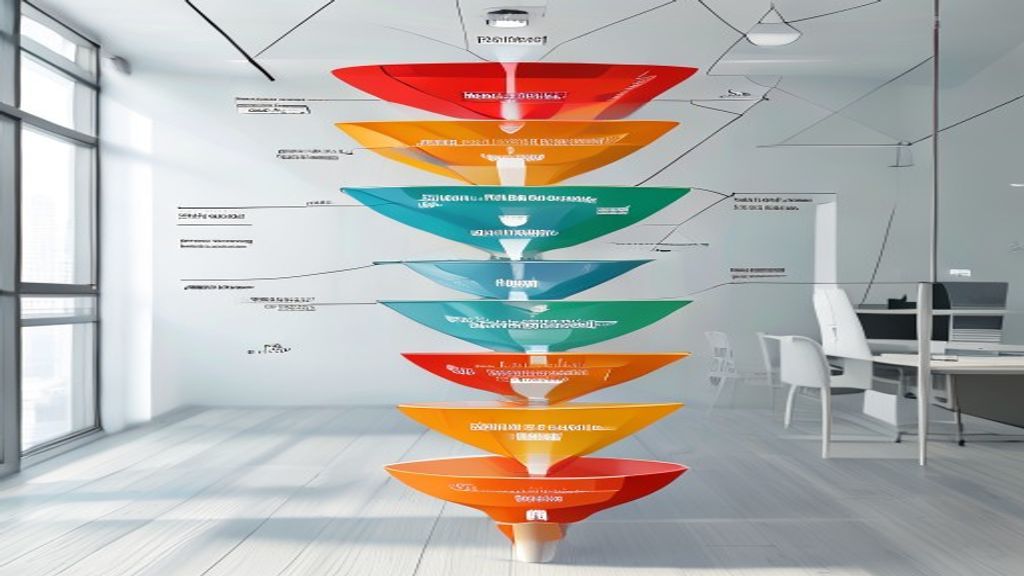
The Funnel Structure flows like this: Problem → Impact → Solution → Proof → Call to Action. You start by articulating the problem so clearly that the person in front of you leans forward. You make the impact tangible—usually in financial or operational terms. Then you present your solution as the inevitable answer. You show proof (case studies, data, testimonials). Finally, you ask for the decision or next step.
Here’s a concrete example from my work: A management consultant had a 47-slide deck structured chronologically—company history, service overview, case studies, pricing, contact information. I restructured it into the Funnel. We opened with a client’s specific problem (revenue declining 12% year-over-year in their industry). Moved to impact (the cost of inaction: £2.3M over 18 months). Showed her solution directly addressing that problem. Proved it with two relevant case studies. Closed with a clear ask: “Can we schedule a one-week diagnostic engagement?” She landed a £80,000 contract two weeks later. Same consultant. Different structure.
The Funnel Structure works because it doesn’t ask your audience to follow you. It pulls them toward your conclusion.
The Pyramid Structure: For Executive Approval
Executives are drowning in information. They have four minutes for your pitch, not 40. The Pyramid Structure respects that reality.
In Pyramid Structure, you lead with your conclusion or recommendation. Immediately. “We should acquire Company X.” “We need to pivot our go-to-market strategy.” “This project will generate £3.2M in incremental revenue.” Then you spend the rest of the presentation building the case beneath that statement. The research. The data. The competitive analysis. The financial projections.
This is the opposite of how most people present to their boss. Most people build to their recommendation, hoping they’ll get there before running out of time. Instead, they run out of time and never land the point. Executives hate this.
The Pyramid Structure flips this. You put your headline first. Everything after it is supporting evidence. If they have to leave at the halfway point, they already know your recommendation. If they stay, they understand exactly why you’re recommending it.
Use this structure for: board updates, budget proposals, quarterly business reviews, strategic recommendations, or any time you’re asking for approval from someone senior.
The Story Structure: For Changing Minds and Raising Capital
Numbers move heads. Stories move hearts. And sometimes you need both.
The Story Structure isn’t fictional. It’s narrative-driven. It typically follows this arc: Setup (a moment or conflict) → Tension (the stakes rise) → Turning Point (something changes) → Resolution (here’s what happened) → The Lesson (here’s what this means for you).
Fundraisers know this intuitively. The best pitch decks don’t lead with a valuation slide. They lead with a founder’s moment of realization, or a customer’s struggle, or a gap in the market that keeps the founder awake at night. That story makes investors care. Then the data backs it up.
I worked with a fintech founder who had a solid business but a forgettable pitch. Her deck was feature-heavy, data-rich, utterly unmemorable. We restructured it around a single story: a young woman in Lagos trying to send money home to her family, blocked by transfer fees and a three-day settlement window. This was the problem. We showed her frustration. Then we showed how the founder’s product solved it in 90 seconds with no fees. The data came next—market size, unit economics, growth projections. But the investors remembered the story. She raised £1.2M in her next round.
The Story Structure works in internal presentations too. Announcing a new strategy? Tell the story of how you realized the old strategy wasn’t working. Launching a product? Tell the story of the customer who inspired it. The narrative frame makes the information stick.
Problem-Solution and Data-Driven Structures
The Problem-Solution Structure is straightforward: State the Business Challenge → Show the Current State → Present the Solution → Detail Implementation → Outline Expected Results. Use this for internal strategy sessions, process improvements, or new product pitches. It works because it frames your idea as the answer to something the organization already recognizes as important.
The Data-Driven Structure is built around evidence. State the Business Question → Show Relevant Data → Interpret the Data → State the Implication → Recommend Action. This is essential for quarterly business reviews, financial reports, and analytics presentations. McKinsey & Company research shows that presentations grounded in clear, interpreted data are 40% more likely to drive decision-making than those with raw information. The key word is interpreted. Don’t just show numbers. Tell people what those numbers mean.
Both structures work because they create clarity. Teams move faster when they understand the shape of the argument before they get lost in the details.
Matching Structure to Your Specific Situation
The right structure depends on three variables: your audience, your goal, and what you’re asking them to do.
Are you selling? Use the Funnel. You’re moving someone from problem awareness to purchase decision.
Are you asking for approval? Use the Pyramid. Lead with your ask, build the case.
Are you trying to change how someone thinks about something? Use the Story. Hook them emotionally first, then present the logic.
Are you solving an internal problem? Use Problem-Solution. Frame your idea as the answer to something they already care about.
Are you reporting on performance or making a data-backed recommendation? Use Data-Driven. Interpret the information, don’t just display it.
Here’s what most people miss: the same company might need different structures for different audiences on different days. You might use the Pyramid Structure for your board and the Funnel Structure for the same message to a prospect. The structure serves your relationship with the audience and your specific goal, not the other way around.
If you’re building elements of a perfect business presentation, the structure is where you start. Everything else—design, copy, data—flows from that skeleton.
Putting It Together: From Structure to Finished Deck
Here’s how I work with clients: we identify the goal first. Not the content. The goal. What does the audience member need to think, believe, or do differently after your presentation ends? That answer determines your structure. Then we scaffold the information to support that structure.
This is different from starting with your information and hoping a structure emerges. We’re designing the structure intentionally, then filling it.
Once you’ve chosen your structure, every slide should answer one question: “Does this slide move us closer to our goal?” If it doesn’t, it goes. This is why presentations designed around a clear structure are typically shorter and more powerful than presentations built chronologically. You’re not adding information. You’re adding only the information that serves the objective.
For quarterly business review presentations, this means cutting the historical context and leading with the metric that changed most significantly. For pitch decks, it means leading with the problem, not the team background. For internal proposals, it means stating the opportunity before explaining the details.
Conclusion
Your presentation structure isn’t about following a template. It’s about architecting persuasion. The Funnel closes deals. The Pyramid wins boardroom approval. The Story changes minds. Problem-Solution frames your idea as an answer. Data-Driven grounds recommendations in evidence.
Choose the structure that matches your goal. Build it intentionally. Then fill it only with information that serves that goal. This approach has worked for management consultants pitching new engagements, founders raising capital, and executives driving organizational change.
Need a presentation designed for you? TheSlidehouse creates professional slide decks for consultants, business owners, and entrepreneurs. Get started here →
Need a presentation designed for you? TheSlidehouse creates professional slide decks for consultants, business owners, and entrepreneurs. Get started here →
If you want to draft presentations faster without starting from a blank slide, Gamma is a practical option for turning ideas into polished decks and visual documents more quickly.
For additional research, see Harvard Business Review for business communication and leadership. For additional research, see Nielsen Norman Group for research-backed communication and UX.

🎁 Free Download: 5 Slides That Win Clients
Enter your email to get instant access to your free Presentation Design Cheat Sheet + the 5 slides every winning client deck must have.
Frequently Asked Questions
How many slides should each presentation structure have?
There’s no magic number. A Funnel Structure for a 30-minute sales presentation might be 12-15 slides. A Pyramid Structure for a 5-minute executive brief might be 5-7 slides. The key is that every slide serves your goal. Cut ruthlessly. If it doesn’t move you closer to your objective, delete it.
Can I use multiple structures in one presentation?
Not really. Your primary structure should be consistent from opening to close. However, within a longer presentation—say, a 45-minute board meeting—you might use the Pyramid Structure as your main framework (recommendation first) but embed smaller story structures or problem-solution sections for specific topics. Think of the Pyramid as the main skeleton and the others as the supporting ribs.
What if my audience is mixed—some people want details, others want headlines?
This is common. Use the Pyramid Structure. Lead with your headline recommendation for the executives. Then provide detailed supporting slides for the people who need to understand the methodology. Everyone gets what they need—those in a hurry get the answer first, those who need the full picture can dig in.
How do I know which structure will work best for my specific presentation?
Ask yourself: What is the one decision or action I need this person to take after my presentation ends? If it’s a purchase, use Funnel. If it’s an approval or belief change, use Pyramid or Story. If it’s understanding a business opportunity, use Problem-Solution. If it’s trusting data-backed recommendations, use Data-Driven. Your goal determines your structure.