
How Your Board Presentation Gets Approved
You’ve got 20 minutes with the board. One shot. A lot depends on what happens in that room—funding, strategy approval, a promotion. Most presenters get this wrong. They pack too much into slides. They bury the real decision point. They hope the board will follow along.
Disclosure: This article contains affiliate links. If you click a link and make a purchase, The Slide House may earn a small commission at no extra cost to you. We only recommend tools we genuinely believe will help you create better presentations. Read our full Affiliate Disclosure.
The boards that approve presentations aren’t confused by the end. They’re clear. They know exactly what they’re voting yes or no on. Here’s how to make that happen.
Key Takeaways
- Board approval hinges on answering one core question before you ever open your deck—what decision do you need them to make?
- The slide structure that wins board votes is different from other presentation formats: fewer slides, extreme clarity, and a decision recommendation on every page
- A real case study: a CFO we worked with cut her board deck from 31 slides to 9, reframed her ask, and got unanimous approval on a $12M capital expenditure in her first presentation to a new board
- Board members respond to specificity and confidence—vague language and hedging kill approval faster than anything else
The One Question That Changes Everything
Before you design a single slide, answer this: What decision does this board need to make?
Not “What do they need to know?” Different question. Different answer. Different deck.
I worked with a SaaS founder who was presenting to her series A board about a pivot in product strategy. Her first draft was 28 slides. Tons of data. Market analysis. Competitive research. User interviews. All relevant. All interesting. When I asked her “What decision do they need to make?” she got quiet.

Then she said: “They need to decide whether we kill feature X or double down on it.”
That’s the decision. Not “here’s everything we’ve learned.” It’s “here’s what we know, and here’s what we recommend you do about it.” We rebuilt that deck in 11 slides. First slide: the recommendation. Slides two through six: evidence. Slides seven through eleven: answers to the hard questions the board would ask. She presented it three weeks later. The board approved the pivot unanimously. It took 16 minutes.
Find your decision first. Build everything around it.
The Structure That Actually Gets Approvals
Board presentations aren’t the same as investor pitches or client pitches or all-hands meetings. Boards need a different structure.
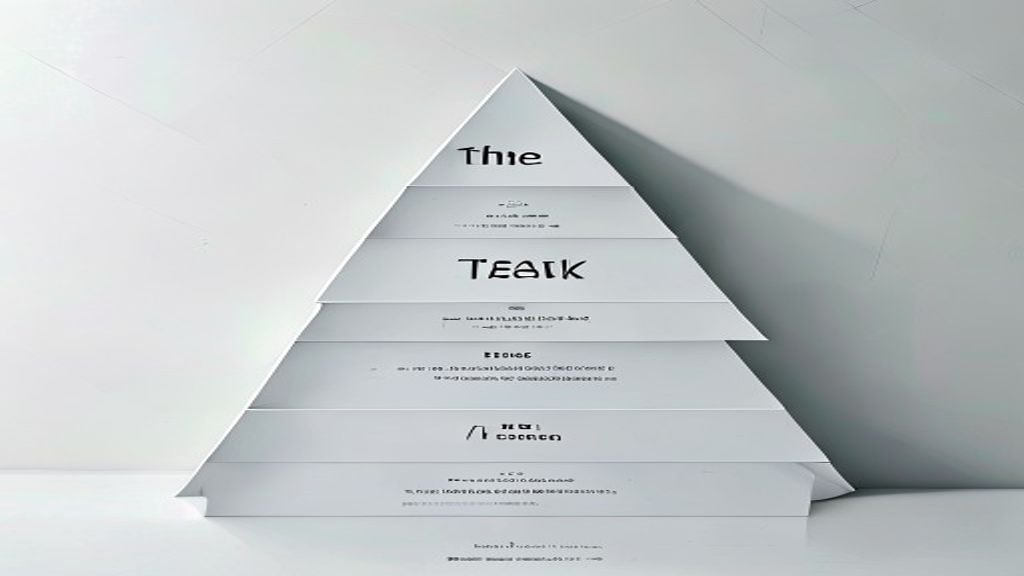
Here’s what I recommend for every board deck I design:
- Slide 1: The Ask — What decision do you need them to make? State it clearly. No suspense. No build-up. “We’re asking the board to approve a $5M budget reallocation to the customer success division.” That’s it.
- Slides 2–4: Why Now — Why does this decision need to happen now? What’s changing? What’s at risk if we don’t act? Ground this in data and business reality, not emotion.
- Slides 5–7: The Evidence — Here’s the proof your recommendation is sound. Financial projections. Market data. Operational metrics. Whatever backs up your ask.
- Slides 8–9: Risk and Mitigation — Every board member will think: “What could go wrong?” Answer it before they ask. Show you’ve thought about downside and what you’ll do about it.
- Slide 10: The Vote — Restate the ask. Ask them to vote. Make approval a clear action, not something vague that might happen later.
This structure works because it respects how board members actually think. They’re not passive listeners. They’re decision-makers processing information toward a yes or no. Give them a path.
Specificity Over Everything Else
Board members hate vague language. They hate hedging. They hate when you say “We believe this could potentially drive approximately X.” They want to know what you actually think will happen.
I watched a head of operations present to the board about a new supply chain system. She said things like “This solution may provide efficiencies” and “There could be cost savings of somewhere in the range of 5–15%.” The board wasn’t hostile. They just… didn’t approve it. They asked for more data. More analysis. More certainty.
Six months later, that same operator came back with the same system. Different framing. “This system will reduce our fulfillment cycle from 4.2 days to 2.8 days. Based on our current order volume, that generates $1.8M in cash flow improvements annually. We’ve validated the timeline with three companies running the identical platform. I recommend we implement it.” Approved in 11 minutes.
The difference was specificity. Numbers. Named examples. Confidence. Boards approve specificity.
When you’re building your deck, go through every claim and ask yourself: Can I be more specific? Can I name it? Can I quantify it? Can I show proof of it? If the answer is no, cut that claim. It’s only weakening your position.
The Rigor Check That Separates Approved From Rejected
Before a board sees your deck, you need to think like a skeptic. What would make a smart board member vote no? Build that into your presentation before they can ask it.
A CFO I worked with was presenting a major capex request—$12M for a new manufacturing facility. Her initial deck was solid: market opportunity, timeline, financial projections. But I asked her a simple question: “What if the timeline slips by six months?”
She hadn’t modeled that. We added a slide showing the impact of a six-month delay. The board approved it in one shot. Later, she told me the board actually thanked her for anticipating that risk. They said it showed she’d thought through the worst case.
This is the hidden structure of board approval that nobody talks about. You’re not just presenting an idea. You’re presenting proof that you’ve already stress-tested it.
For your board deck, answer these questions before you present:
- What’s the worst-case scenario? How are we protected?
- What would make a board member vote no? Have we addressed it?
- Where could we be wrong? What would we do then?
- What’s the biggest risk to execution? How will we monitor for it?
If you can’t answer these clearly, your deck isn’t ready for the board.
The Approval Language That Actually Works
Boards have different language preferences than other audiences. I always recommend studying TED Talks for storytelling and persuasion, but board language is different. It’s more direct. Less narrative. More outcome-focused.
Instead of: “We’ve noticed that our customer retention has been a challenge, and we want to explore new approaches to address this opportunity.”
Say: “Retention dropped 8% last quarter. We’re implementing a customer success team focused on accounts over $50K ARR. This addresses 64% of our churn risk.”
Boards don’t need the story. They need the fact, the action, and the impact. In that order.
Three rules for board presentation language:
- Lead with outcome. “We will increase revenue” beats “We have created a program that is designed to potentially impact revenue.”
- Use numbers, not adjectives. “15% improvement” beats “significant improvement.” “4 weeks” beats “soon.”
- Remove optionality. “We recommend” beats “We could consider.” “We will” beats “We might.”
If you want your board presentation to get approved, speak their language.
When the Board Says No—And How to Recover
Sometimes the board doesn’t approve. That’s not failure. It’s data. The key is understanding why.
A head of strategy we worked with got a no on a market expansion proposal. She didn’t get defensive. Instead, she listened carefully to the objections. The board said they loved the strategy but had concerns about execution capability given current headcount. That wasn’t a rejection of the idea. It was a request for a different solution.
She came back two weeks later with a modified proposal: same strategy, phased timeline, external consulting partner for the first 12 months, clear staffing plan for year two. The board approved it unanimously.
This is the thing most presenters miss: board feedback isn’t personal. It’s usually solvable. When you get a no, ask: What would need to change for this to be a yes? Then build your next presentation around that answer.
If you need structured help with this kind of strategic repositioning, we have a guide on how to write speaker notes like a pro that helps executives prepare answers for exactly these kinds of follow-up conversations.
Conclusion: The Approval Starts Before You Present
Board presentations get approved when you do the work before you ever open your slides. Know your decision. Know your evidence. Know your risks. Know your language. Structure it clearly.
The presentation itself is just the delivery mechanism. The real approval happens in the rigor of your thinking. Boards can tell when you haven’t done the work. They can also tell when you have.
Need a presentation designed for you? TheSlidehouse creates professional slide decks for consultants, business owners, and entrepreneurs. Get started here →
Need a presentation designed for you? TheSlidehouse creates professional slide decks for consultants, business owners, and entrepreneurs. Get started here →
If you want to draft presentations faster without starting from a blank slide, Gamma is a practical option for turning ideas into polished decks and visual documents more quickly.
For additional research, see Nielsen Norman Group for research-backed communication and UX.

🎁 Free Download: 5 Slides That Win Clients
Enter your email to get instant access to your free Presentation Design Cheat Sheet + the 5 slides every winning client deck must have.
Frequently Asked Questions
How long should a board presentation be?
Most board presentations should be 8–12 slides and take 15–20 minutes to present. Boards have limited time and respect presenters who respect that constraint. More slides don’t mean better information—they mean you haven’t done the editing work. Cut ruthlessly.
Should I include a lot of financial detail in board presentations?
Include the financial detail that directly supports your decision recommendation. Leave the rest for the appendix. If board members want to drill into unit economics or historical performance, they’ll ask. Your job is to present the numbers that matter to the decision at hand, not to overwhelming them with data.
What’s the best way to handle board questions during a presentation?
Answer directly and briefly. If you don’t know, say so and commit to following up in writing. Boards respect honesty and speed far more than long-winded answers that circle back to your talking points. If the question reveals a gap in your analysis, acknowledge it and adjust your recommendation if needed.
How much time should I spend on slide design for a board deck?
Spend time on clarity and structure, not decoration. Board members care about readable text, clear data visualization, and professional polish. They don’t care about trendy fonts or elaborate animations. A clean, simple design with high-contrast text will serve you far better than a visually complicated deck.